Iranian courts issue death ruling, prison sentences in protest-related cases


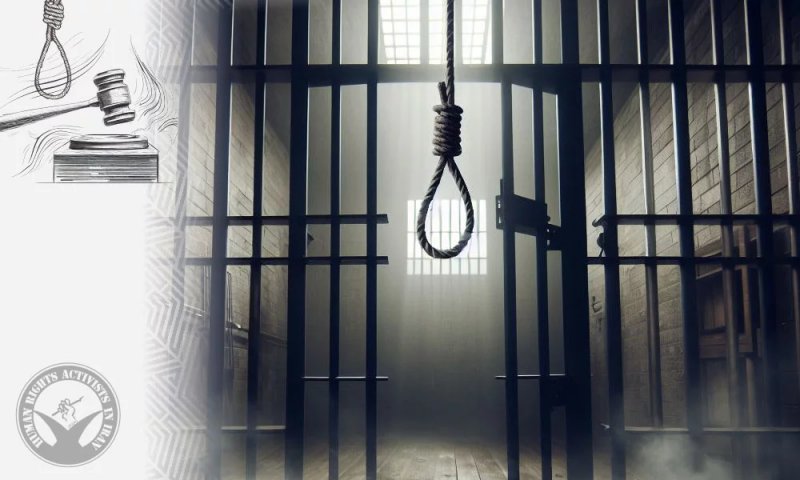
Iranian courts have issued a death sentence and a range of prison terms in four separate cases involving individuals arrested during the nationwide protests of January 2026, according to reports from the Human Rights Activists News Agency (HRANA).
Ali Kamali, who was arrested on 12 January 2026 during protests in Tehran after returning to Iran from Malaysia, has been sentenced to death by Branch 26 of the Tehran Revolutionary Court on the charge of moharebeh (“enmity against God”). The ruling, issued in mid-May, is currently under review by Iran’s Supreme Court. Kamali is being held in Greater Tehran Prison. No further details of the proceedings have been made public, News.Az reports, citing HRANA.
In a separate case, Branch 18 of the Khuzestan Province Court of Appeals upheld a prison sentence against political prisoner Mohammad Hosseini Chamani, while also reducing his original term.
Under the appellate ruling, Hosseini Chamani was sentenced to 15 months and one day in prison for “disrupting public order” and a further 15 months and one day for “insulting the Supreme Leader”, bringing his total sentence to two years, six months and two days. Supplementary punishments imposed at trial, including travel restrictions and mandatory attendance at the Office for the Promotion of Virtue and Prevention of Vice, were removed. He was originally sentenced by Branch 1 of the Ahvaz Revolutionary Court to four years in prison.
RECOMMENDED STORIES
In a third case, Afghan national Homeyra Sharifi, who was arrested during the protests and later transferred from Qarchak Prison to Evin Prison, has been sentenced to five years in prison. According to HRANA, the sentence was recently communicated to her while she is being held in Evin Prison.
Reports indicate that Sharifi suffers from both physical and psychological health problems, including a skin condition, and has been denied adequate medical care. A source familiar with her situation told HRANA that she does not possess identity documents and has attempted suicide twice since her transfer to Evin Prison, most recently last week. Following concerns raised by fellow prisoners, she reportedly received a single counselling session but no sustained treatment.
In the fourth case, the convictions of Rostam Shahpari Talkh Abi and Iman Shahpari Nia were upheld by Branch 14 of the Khuzestan Province Court of Appeals. Both men were arrested on 9 January 2026 during the protests and are currently held in Sheiban Prison in Ahvaz.
They were each sentenced to two years in prison for “disrupting public order”, along with a two-year travel ban and one year of mandatory attendance at the Headquarters for the Promotion of Virtue and Prevention of Vice. The court relied on the note to Article 286 of the Islamic Penal Code in issuing the verdict.
According to legal analysis cited in the ruling, the charge was processed under a provision typically associated with the offence of efsad-e fel-arz (“corruption on earth”), though in this instance the court applied the accompanying note, which allows for discretionary prison sentences where conduct is deemed security-related but not severe enough to warrant the death penalty.
Taken together, the cases reflect a broader pattern of prosecutions linked to the January 2026 protests, involving charges ranging from public order offences to national security-related accusations, with sentences spanning from multi-year imprisonment to capital punishment.


Similar news